Search This Blog

Showing posts with label Admired Collection. Show all posts

Saturday, 27 July 2013

இஃதிகாஃபின் சட்டங்கள்

 
இஃதிகாப் என்ற அரபி வார்த்தைக்கு தங்குதல்’ என்ற பொருளாகும். இஸ்லாமிய வழக்கில் பள்ளியில் நன்மையை எதிர்பார்த்துத் தங்குவதற்கு இஃதிகாஃப் என்று சொல்லப்படும்.
நபி (ஸல்) அவர்கள் ரமலான் மாதத்தின் கடைசி 10 நாட்கள் இஃதிகாஃப் இருந்துள்ளார்கள். நபித்தோழர்களும் இருந்துள்ளனர்.
ரமலானில் இஃதிகாப் எதற்காக?
ஆயிரம் மாதங்களை விடச் சிறந்த இரவாக இருக்கும் லைத்துல் கத்ரை அடைந்து அதில் அதிகமதிகம் நன்மைகளைச் செய்ய வேண்டும், வேறு எண்ணங்களுக்கு இடம் கொடுத்து வணக்கங்களைக் குறைத்து விடக் கூடாது என்பதற்காகத் தான் ரமளானின் கடைசிப் பத்து நாட்கள் நபி (ஸல்) அவர்களும் நபித் தோழர்களும் இஃதிகாப் இருந்துள்ளார்கள் என்பதற்குப் புகாரியின் 813 செய்தி ஆதாரமாக உள்ளது.

இஃதிகாபின் ஆரம்பம்

இஃதிகாஃப் இருக்க நாடுபவர், 20ஆம் நாள் காலை சுப்ஹுத் தொழுது விட்டு இஃதிகாஃப் இருக்கும் இடத்திற்குச் சென்று விட வேண்டும்.
நபி (ஸல்) அவர்கள் இஃதிகாப் இருக்க நாடினால் பஜ்ரு தொழுகையை முடித்து விட்டு இஃதிகாப் இருக்கும் இடத்திற்குச் செல்வார்கள். (நூல்: முஸ்லிம் 2007)
ஒற்றை இரவுகளில் லைலதுல் கத்ரைத் தேடுமாறு நபி (ஸல்) அவர்கள் கூறியுள்ளதை நாம் முன்பே அறிந்துள்ளோம். எனவே பஜ்ரு தொழுதவுடன் இஃதிகாப் இருக்கத் துவங்குவார்கள் என்பது 21ஆம் நாள் பஜ்ராக இருக்க முடியாது.
அப்படி இருந்தால் அந்த இரவு அவர்களுக்குத் தவறிப் போயிருக்கும். 20 ஆம் நாள் தொழுது விட்டு இஃதிகாஃப் இருப்பார்கள் என்று விளங்குவதே பொருத்தமாக இருக்கும்.

இஃதிகாபின் முடிவு நேரம்

இஃதிகாப் இருப்பவர் ரமலான் மாதம் 29ல் முடிந்தால் அன்றைய மஃக்ரிபில் (அதாவது ஷவ்வால் பிறை தென்பட்ட இரவில்) இல்லம் திரும்பலாம்.
ரமலான் மாதம் 30 பூர்த்தியடைந்தால் அன்றைய மஃரிப் தொழுக்குப் பிறகு தன் இல்லம் திரும்பலாம்.
அபூஸயீத் (ரலி) கூறியதாவது: நபி (ஸல்) அவர்கள் ரமலான் மாதத்தின் நடுப்பகுதியில் உள்ள பத்து நாட்களில் இஃதிகாப் இருப்பார்கள். இருபதாம் இரவு கழிந்து மாலையாகி இருபத்தொன்றாம் இரவு துவங்கியதும் தமது இல்லம் திரும்புவார்கள். (சுருக்கம்) (நூல்: புகாரி 2018)
நபி (ஸல்) அவர்கள் நடுப் பத்தில் இஃதிகாப் இருக்கும் போது இருபதாம் இரவு கழிந்து மாலையாகி இருபத்தொன்றாம் இரவு துவங்கியதும் போவார்கள் என்ற செய்தியிலிருந்து, கடைசிப் பத்தில் இஃதிகாப் இருப்பவர்கள் 29 இரவு கழிந்து அல்லது 30 இரவு கழிந்து மாலையாகி ஷவ்வால் மாதம் துவங்கும் இரவில் வீடு திரும்பலாம் என்பதை அறியலாம்.
பெருநாள் தொழுகை முடித்து விட்டுத் தான் வீடு திரும்ப வேண்டுமென சிலர் கூறினாலும் அதற்கு நபிமொழிகளில் ஆதாரம் இல்லை.
பள்ளியில் கூடாரம் அமைக்கலாமா?
நபி (ஸல்) அவர்கள் ரமலானில் கடைசிப் பத்தில் இஃதிகாப் இருப்பார்கள் நான் அவர்களுக்காக ஒரு கூடாரத்தை அமைப்பேன் என்று அன்னை ஆயிஷா (ரலி) கூறினார்கள். (சுருக்கம்) (நூல்: புகாரி 2033)
இந்த ஹதீஸின் அடிப்படையில் சிலர் கூடாரம் அமைக்கலாம் என்று கூறுகின்றனர். ஆனால் வேறு சில ஹதீஸ்களை நாம் கவனிக்கும் போது இது நபி (ஸல்) அவர்களுக்கு மட்டும் குறிப்பானது என்பதை விளங்கலாம்.
நபி (ஸல்) அவர்கள் இஃதிகாப் இருக்க நாடினார்கள். அவர்கள் இஃதிகாப் இருக்கும் இடத்திற்குச் சென்றபோது ஆயிஷா (ரலி)வின் கூடாரம், ஹஃப்ஸாவின் கூடாரம், ஸைனபின் கூடாரம் எனப் பல கூடாரங்களைக் கண்டார்கள். “இதன் மூலம் நீங்கள் நன்மையைத் தான் நாடுகிறீர்களா?” என்று கேட்டு விட்டு இஃதிகாஃப் இருக்காமல் திரும்பி விட்டார்கள். ஷவ்வால் மாதம் பத்து நாட்கள் இஃதிகாப் இருந்தார்கள். அறிவிப்பவர்: ஆயிஷா (ரலி) நூல்: புகாரீ (2034)
“நீங்கள் நன்மைத்தான் நாடுகிறீர்களா?” என்ற கேள்வியும், நபி (ஸல்) அவர்கள் தமது கூடாரத்தையே பிரித்து இஃதிகாபை விட்டதும் இவ்வாறு கூடாரங்கள் அமைப்பதில் அவர்களுக்கு இருந்த அதிருப்தியைக் காட்டுகின்றது.
மேலும் பின்வரும் ஹதீஸை பார்த்தாலும் மற்றவர்கள் கூடாரம் அமைக்கக் கூடாது என்பதை விளங்கலாம்.
… நபி (ஸல்) அவர்கள் காலைத் தொழுகையை முடித்து விட்டுத் திரும்பிய போது நான்கு கூடாரங்களைக் கண்டு இவை என்ன? கேட்டார்கள். அவர்களுக்கு விவரம் கூறப்பட்டது… (புகாரீ 2041)
நபி (ஸல்) அவர்களுடன் நபித்தோழர்களும் இஃதிகாப் இருந்துள்ளனர். இதை கவனத்தில் வைத்து மேற்கூறிய ஹதீஸை கவனியுங்கள். காலைத் தொழுகையை தொழுது விட்டு நபி (ஸல்) அவர்கள் பள்ளியில் பார்த்த கூடாரங்களின் எண்ணிக்கை மொத்தம் நான்கு. ஒன்று நபி (ஸல்) அவர்களுக்குரியது, இரண்டாவது அன்னை ஆயிஷா (ரலி) அவர்களுக்குரியது. மூன்றாவது அன்னை ஹஃப்ஸா (ரலி) அவர்களுக்குரியது. நான்காவது அன்னை ஸைனப் (ரலி) அவர்களுக்குரியது.
இஃதிகாப் இருப்பதற்குக் கூடாரங்கள் அவசியம் என்றிருந்தால் நபித்தோழர்களும் கூடராங்களை அமைத்திருக்க வேண்டும். அவ்வாறு அமைத்திருந்தால் நான்கிற்கும் மேற்பட்ட கூடாரங்கள் இருந்திருக்க வேண்டும். ஆனால் இருந்ததோ மொத்தம் நான்கு கூடாரங்கள் மட்டுமே! எனவே நபித்தோழர்கள் கூடாரங்களை அமைக்கவில்லை என்பதையும் நபி (ஸல்) அவர்கள் நபித்தோழர்களுக்கு கட்டளையிடவில்லை என்பதையும் நாம் அறியலாம். எனவே இஃதிகாபிற்கு கூடாரங்கள் தேவையில்லை.

இஃதிகாபில் பேண வேண்டிய ஒழுங்குகள்

பள்ளிவாசலில் இருக்கும் போது மனைவியுடன் இல்லறத்தில் ஈடுபடக் கூடாது.
பள்ளிவாசல்களில் இஃதிகாஃப் இருக்கும் போது மனைவியருடன் கூடாதீர்கள்! இது அல்லாஹ்வின் வரம்புகள். எனவே அதை நெருங்காதீர்கள்! (தன்னை) அஞ்சுவதற்காக அல்லாஹ் தனது வசனங்களை மக்களுக்கு இவ்வாறு தெளிவுபடுத்துகிறான். (அல்குர்ஆன் 2:187)
தேவையில்லாமல் பள்ளியை விட்டு வெளியே செல்லக்கூடாது
ஆயிஷா ரலி கூறியதாவது: நபி (ஸல்) அவர்கள் பள்ளியில் இஃதிகாப் இருக்கும் போது தமது தலையை வீட்டிலிருக்கும் என் பக்கம் நீட்டுவார்கள் அதை நான் வாருவேன். இஃதிகாப் இருக்கும் போது தேவைப்பட்டால் தவிர வீட்டிருக்குள் வர மாட்டார்கள். (நூல்: புகாரி 2029)
இதிலிருந்து தேவையில்லாமல் வெளியில் செல்லக் கூடாது என்பதையும் அவசியத் தேவைக்காக வெளியே செல்லாம் என்பதை அறியலாம்.

பெண்கள் இஃதிகாப் இருக்கலாமா?

பெண்கள் பள்ளிவாசலில் இஃதிகாஃப் இருக்கலாம் என்பதற்குப் பின்வரும் செய்தி ஆதாரமாக உள்ளது.
நபி (ஸல்) அவர்கள் இஃதிகாஃப் இருக்கும் போது அவர்களின் மனைவியரில் ஒருவரும் இஃதிகாஃப் இருந்துள்ளார்கள். அறிவிப்பவர்: ஆயிஷா (ரலி), நூல்: புகாரீ (309)
நபி (ஸல்) அவர்கள் காலத்தில் நபிகளாரின் மனைவியைத் தவிர வேறு எந்த பெண்களும் இஃதிகாஃப் இருந்ததாக நாம் அறிந்தவரை ஹதீஸ்களில் இடம் பெறவில்லை.
நபிகளாரின் மனைவிகள் இஃதிகாஃப் இருந்ததிலிருந்து கூடுதல் பட்சமாக பின்வரும் சட்டத்தை நாம் எடுக்கலாம்.
பள்ளிவாசலில் பெண்கள் இஃதிகாஃப் இருக்க வசதிகள் இருக்கமானால் கணவனுடன் அவர்கள் இஃதிகாஃப் இருக்கலாம். ஏனெனில் நபி (ஸல்) அவர்கள் காலத்தில் நபியவர்களுடன் தான் அவர்களது மனைவிமார்கள் இஃதிகாஃப் இருந்துள்ளார்கள்.
பெண்கள் இஃதிகாஃப் தொடர்பாக அறிஞர்களிடையே உள்ள கருத்துக்களில் மேலே நாம் சொன்ன கருத்தே ஹதீஸுக்குப் பொருத்தமாக அமைந்துள்ளது
THANKS TO TNTJ 

Saturday, 22 June 2013

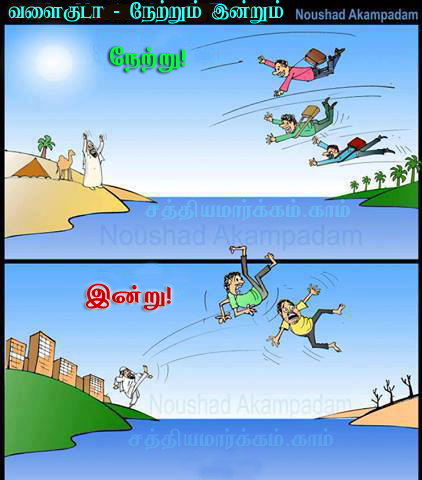
வீசி எறியப்படும் வளைகுடா

கடந்த 1960 களில் வளைகுடா நாடுகளில் பெட்ரோல் படுகைகள் கண்டுபிடிக்கப் பட்டபோது வறண்ட பாலைவனமாக இருந்த இப் பிரதேசங்களைக் கட்டமைக்க இலட்சக் கணக்கான தொழிலாளர்கள் தேவைப்பட்டனர்.
இந்தியா, பாகிஸ்தான், பங்களாதேஷ், இலங்கை, நேபாளம், பிலிப்பைன்ஸ் ஆகிய நாடுகளிலிருந்து கை நிறையச் சம்பளத்துடனும் கவர்ச்சியான சலுகைகளுடனும் பல்வேறு துறைகளில் திறமையான தொழிலாளர்கள் இறக்குமதி செய்யப்பட்டனர். அந்த நேரத்தில் போதிய உள்நாட்டு வேலை வாய்ப்புகளற்று இருந்த இந்தியா, பாகிஸ்தான் போன்ற நாடுகள், வளைகுடா நாடுகளிலிருந்து வரத் துவங்கிய அந்நியச் செலவாணிகளில் சுகம் கண்டு, கிடைத்தவரை லாபம் என்ற மனநிலையில் நாடு திரும்ப நேரிடும் வெளிநாடுவாழ் மக்களுக்கான உருப்படியான திட்டங்கள் ஏதுமின்றி இருந்தன.
2010-2011 ஆம் ஆண்டில் துனீஷியா, எகிப்து, லிபியா போன்ற வட ஆப்பிரிக்க நாடுகளில் ஏற்பட்ட மக்கள் புரட்சியின் காரணமாக ஆட்சியாளர்களின் பதவிகள் பறிக்கப்பட்டு ஆட்சிமாற்றம் ஏற்பட்டது. மேற்கத்திய நாடுகள் இதனை “வளைகுடா வசந்தம்” என்று குறிப்பிட்டனர். பெட்ரோலிய வளம் மிக்க ஏனைய அரபு நாடுகளிலும் பல்வேறு காரணங்களுக்காக மக்கள் புரட்சி ஏற்படும் சூழல் இருந்தாலும் அரேபிய மன்னராட்சியாளர்கள் அவற்றை ஓரளவு சமாளித்து வருகின்றனர். எனினும், இங்கொன்றும் அங்கொன்றுமாக அவ்வப்போது புரட்சிக்குரல் எழுவதும் அவற்றைத் திரைமறைவுப் பேரங்கள் வாயிலாகவோ அல்லது தேசத் துரோகக் குற்றச்சாட்டுகளின் பெயரில் சாம/பேத/தண்ட நடவடிக்கைகள் வாயிலாகவோ ஒடுக்குவதும் நடைபெற்று வருகின்றன.
நாம ஊர் விட்டு இங்கே பொழக்க வந்திருக்கோம்… இந்த நாட்டு கவர்மெண்ட்டு போகச் சொன்னா போயிட வேண்டியது தானே? இதிலே என்ன எதிர்ப்பு வேண்டிக் கிடக்கு?
இந்நிலையில் எஞ்சியுள்ள அரேபிய நாடுகளிலும் வளைகுடா வசந்தம் பரவி, இதுநாள் வரை அனுபவித்து வந்த சுகபோக வாழ்வுகள் பறி போய்விடுமோ என்ற கவலை அரபு ஆட்சியாளர்களுக்கு ஏற்பட்டதால், தம் குடிமக்களை வசப்படுத்த பல்வேறு சலுகைகளை, நலத் திட்டங்களை அவர்கள் அறிவித்தனர். ஏற்கனவே குடிமக்களுக்கு நிலம், வீடு, நீர், மின்சாரம், உயர்கல்வி, திருமணம் என்று அனைத்து அடிப்படைத் தேவைகளையும் வளைகுடா அரசுகள் இலவசமாக வாரி வழங்குவது கவனிக்கப் பட வேண்டியதாகும். எனினும், தற்போது அதிகம் இளைஞர்கள் படித்துப் பட்டம் பெற்று வருவதன் மூலம் நாட்டில் வேலைவாய்ப்பின்மை சிறிது சிறிதாகப் பெருகியதால், இத்தகைய நலத் திட்டங்களில் மக்களுக்குத் திருப்தி ஏற்படவில்லை.
இதனைக் கண்டு கொண்ட ஆளும் வர்க்கம், குடிமக்களுக்கு மேலும் நம்பிக்கை ஏற்படுத்தும் விதமாக, வெளிநாட்டுத் தொழிலாளர்கள் மீது தன் பார்வையைத் திருப்பியது.. அவர்கள் மீது பல்வேறு கட்டுப்பாடுகளை ஆள்வோர் விதித்தனர். இதன் விளைவாக, சவூதியின் நிதாகத் (Nitaqat/அறநெறி) சட்டத்தைத் தொடர்ந்து குவைத்திலும் வெளிநாட்டுத் தொழிலாளர்கள் மீது கிடுக்கிப் பிடி சட்டம் பாய்கிறது. இது, உள்நாட்டு மக்களுக்கு உயர் பதவிகளில் வேலை வாய்ப்பினை ஏற்படுத்தித் தருவதற்காக அமைக்கப்பட்ட Saudization, Omanization, Qatarization, Emiratization போன்றவற்றின் புதிய பதிப்பு என்றாலும், இம்முறை சற்று கூடுதல் கெடுபிடிகள் உள்ளன.
சவூதியின் நிதாகத் சட்டத்தின்படி ஆயிரக்கணக்கான இந்தியர்கள் வேலை வாய்ப்பினை இழந்த செய்திகளைக் கடந்த சில மாதங்களாக அறிந்து வருகிறோம். அதனைத் தொடர்ந்து கடந்த சில வாரங்களாக முன்னறிவிப்பின்றி, குவைத்தும் களத்தில் இறங்கியுள்ளது. இதில் சிக்கியவர்களுள் தாய்நாடு திரும்பத் தயங்குபவர்கள், மறுபரிசீலனைக்கு விண்ணப்பிப்பவர்கள், நிபந்தனைக் காலத்திற்குள் வெளியேறாதவர்கள் என எந்தப் பேதமுமின்றிக் கொத்தாக அள்ளிச் சென்று சிறையில் அடைக்கும் பணிகள் முழுவீச்சில் நடைபெற்று வருகின்றன. தாய்நாட்டிற்குத் திரும்ப விமானங்களில் இடம் கிடைக்காத குறுகிய கால இடைவெளியில் பல்லாயிரக் கணக்கானோரை வெளியேற்றிக் கொண்டிருப்பது இந்தியத் தூதரகங்களுக்கே சவாலான விசயமாக உள்ளது. காலக் கெடுவை நீடிக்கக் கோரி இந்தியத் தூதரகம், தமிழக அமைப்புகள், மற்றும் பேரவைகள் சார்பாக முன் வைக்கப்பட்ட வேண்டுகோளும் நிராகரிக்கப் பட்டுள்ளது.
(வெளியாகும் செய்திகளின்படி, குவைத்தில் இருந்து மட்டும் வருடத்திற்கு ஒரு லட்சம் வீதம் என மொத்தம் 10 இலட்சம் வெளிநாட்டுத் தொழிலாளர்களை, பலவந்தமாக வெளியேற்ற உத்தரவு பிறப்பிக்கப்பட்டுள்ளது. குவைத்தில் மட்டும் மொத்தம் 6.5 இலட்சம் இந்தியர்கள் பணிபுரிகின்றனர் என்பதும் அதில் சரிபாதி கேரள மாநிலத்தவர் என்பதும் குறிப்பிடத்தக்கது)
வளைகுடா நாட்டு அரசுகள் மேற்கொண்டு வரும் இந்த அடக்குமுறை, சரியென்றும் தவறென்றும் இருவிதமான கருத்துக்கள் இந்தியர்களிடையே நிலவி வருவதைக் காண்கிறோம்.  “நாம ஊர் விட்டு இங்கே பொழக்க வந்திருக்கோம்… இந்த நாட்டு கவர்மெண்ட்டு போகச் சொன்னா போயிட வேண்டியது தானே? இதிலே என்ன எதிர்ப்பு வேண்டிக்கிடக்கு?” என்பது போன்ற கமெண்ட்டுகளோடு வளைகுடா அரசுகளின் இச்செயல் மிகச் சரிதான் என்று ஓட்டளித்த நபர்கள், நல்ல ஸ்திரமான வேலைகளிலும் உயர் பதவிகளிலும் கை நிறைய சம்பாதிப்பவர்கள்; அதிர்ஷ்டவசமாக இத்தகைய சிக்கல்களில் மாட்டிக்கொள்ளாதவர்கள்.
கடைமட்டத்தில் தொடங்கியுள்ள இந்தச் ‘சுத்திகரிப்பு’ நடவடிக்கை மேல் மட்டத்திலும் தொடர்வதற்கு அதிகக் காலமில்லை. இப்போதே 60 வயதைத் தொட்ட சீனியர்களுக்குக் குடியேறல் (இக்காமா) புதுப்பித்தல் இல்லை என்று சொல்கிறார்கள். அடுத்து, தொழில் மற்றும் வர்த்தகச் சிக்கல்களுக்குத் தீர்வு சொல்லும் திறனாளிகள் தவிர்த்து மற்ற பணிகள் மண்ணின் மைந்தர்களுக்கே என்றும் தகவல்கள் வருகின்றன. வெளிநாட்டவர்களுக்கான விசாவிற்கு விண்ணப்பித்தல், புதுப்பித்தல் துவங்கி டிரைவிங் லைசன்ஸ் வரை கழுத்தை நெரிக்க வைக்கும் கெடுபிடிகள் அதிகரிக்கப்பட்டுள்ளன.
இந்த நேரத்தில், நம் அடி மனதில் எழும் கேள்விகளைத் தடுக்க இயலவில்லை. ஆனால், இந்தக் கேள்விகள் மூலம் எழுந்து நிற்கும் “யானைக்கு மணி கட்டுவது யார்?” என்ற கேள்வி அதைவிட பூதாகரமாய் நிற்கிறது.
ஒரு நாட்டின் சட்ட திட்டங்களுக்குக் கட்டுப்படுவது, அங்கு பணியாற்றச் சென்றவர்களின் கடமை. இதில் மாற்றுக் கருத்தில்லை. ஆனால், தம் நாட்டின் அடிப்படைக் கட்டமைப்புகள் சீரடைந்தவுடன் பிழிந்து போட்ட கரும்புச் சக்கையாய், இதுநாள்வரை அந்த நாடுகளின் முன்னேற்றத்தின் முதுகெலும்பாய் இருந்தவர்கள் மீது இப்படிக் கடுமை செலுத்தி வெளியேற்றுவது எவ்வகையில் நியாயம்?
ஸ்பான்ஸரின்கீழ் வேலை செய்யாமல் ஏதோ ஒரு காரணத்திற்காக அவரிடமிருந்து வெளியேறிச் “சட்டத்தை மீறிவிட்ட குற்றத்திற்காக” நாட்டை விட்டுத் துரத்தப்படும் அவல நிலை ஒரு பக்கம் இருக்கட்டும். ஒப்பந்தத்தில் கையெழுத்திட்டு வேலைக்குவந்த தொழிலாளி, என்ன காரணத்தால் தப்பித்து ஓடினார் என்று நடுநிலையாக இருதரப்பிலும் விசாரணை மேற்கொண்ட பிறகு, தவறு செய்தவர் பக்கம் நடவடிக்கை எடுப்பதுதானே சரியான அணுகுமுறை?
தாய், தாரம், சகோதரிகள் கழுத்தில் கிடந்த கருகமணி / தாலி உட்பட அனைத்தையும் விற்று அடகுவைத்து, டிராவல்ஸ் புரோக்கர் – ஏஜண்ட்டுக்கும் விமான டிக்கெட் என்றும் பணம் கட்டி வளைகுடா கனவில் வரும் தொழிலாளிகள், ரத்தம் சிந்திச் சம்பாதிக்கும் பணத்தில் பெருந்தொகையை உள்நாட்டு ஸ்பான்ஸருக்குக் கப்பம் கட்டும்படியான ஃப்ரீ விஸா (ஆஸாத் விசா) எனும் அடிமை வியாபாரத்தை வளரச் செய்த இத்தகைய ஸ்பான்ஸர்களுக்கு என்ன தண்டனை அளிக்கப் போகின்றன இந்த அரசுகள்?
(நாம் அறிந்த இந்திய டிரைவர் ஒருவர், 800 ரியால்கள் மட்டுமே சம்பளம் தரும் தமது ஸ்பான்ஸர் வீட்டுக் கொடுமை தாங்க முடியாமல், வெளியில் சென்று வேலை செய்யக் கோரிக்கை விடுத்துள்ளார். அந்த அடிமையை “விடுதலை” செய்வதற்காக ஸ்பான்ஸர் கேட்ட கப்பத் தொகை 8 ஆயிரம் ரியால்கள் முதல் 10 ஆயிரம் ரியால்கள் வரை. இந்தக் கடனை அடைக்க எத்தனை மாதங்கள் தனியே உழைக்க வேண்டியிருக்கும் என்பதையும் அந்தக் கடன் தொகை அடைந்த பிறகே அவருடைய குடும்பத்தினருக்காக உழைக்கத் தொடங்க வேண்டும் என்பதையும் சிந்தித்தால் முதுகுத் தண்டு சில்லிடும். இவருக்காவது ஒரு முறையோடு ஆயிற்று. வருடந்தோறும் கப்பம் கட்டும் “கத்தாமா” (பணிப்பெண்கள்) கண்ணீர்க் கதைகள் இங்கே நிறைய உண்டு. இந்நாட்டுக் குடிமகன்களுக்கு மில்லியன் கணக்கில் லாபம் ஈட்டித் தரும் அநியாயத் தொழில் இது என்பதை அரசுகள் “அறியாமல்” போனது துரதிருஷ்டம்) – வாசிக்க: கல்ஃப் ரிட்டர்ன்: http://www.satyamargam.com/597)
இந்தக் கொடுமையெல்லாம் கடைநிலைத் தொழிலாளிகளுக்கு மட்டும் தான் என்றில்லை. படித்துப் பட்டம் பெற்ற மேல்தட்டு அலுவலர்கள் கூட இந்த அடிமை வியாபாரத்தில் சிக்கி வாழ்க்கையில் சில வருடங்களை இழந்துள்ளனர்.
இத்தகைய நாடுகளில் இயங்கும் தொழிலாளர்களுக்கான அமைச்சகங்கள் (Ministry of Labor) மற்றும் மனித உரிமை மீறல்பற்றி ஏட்டளவில் பேசும் ஐ.நா, ஸ்பான்ஸர் மீதுள்ள தவறுகளைக் காணும் சூழல்களில் மவுனித்து விடுவது அதன் பாரபட்சத்தை வெளிச்சத்திற்கு கொண்டு வருகிறது.
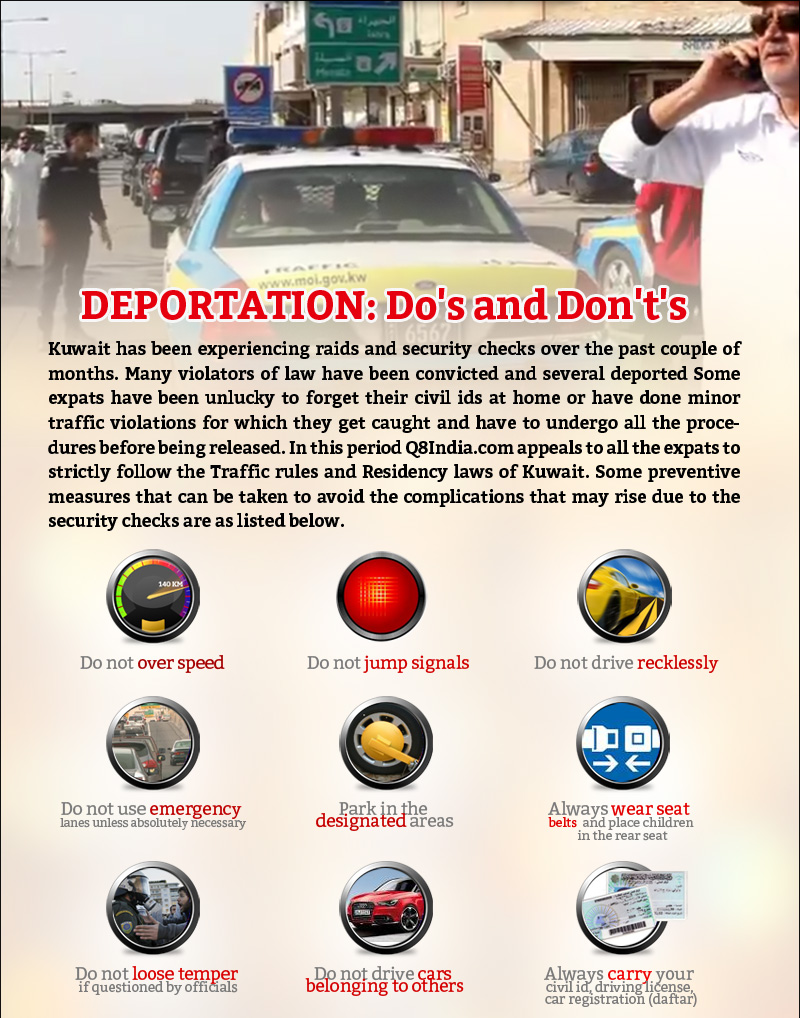
நாட்டை விட்டு ஒரு தொழிலாளியை வெளியேற்றும் தகுதிகள் என்னென்ன என்று குவைத் அரசு விளம்பரப் படுத்தியிருக்கும் பட்டியல் வியப்பை ஏற்படுத்துகிறது. கீழே காண்க:deportation-regulations
காரை சரியான இடத்தில் பார்க் செய்யவில்லை என்றாலும் நாடு கடத்தல்     சீட் பெல்ட் போடவில்லை என்றாலும் நாடு கடத்தல்     தமது PRO வின் மொபைல் எண் கையில் இல்லை என்றாலும் நாடு கடத்தல்
என்று நீளும் பட்டியல் மிரள வைக்கிறது. இந்தப் பட்டியலின் அடிப்படையில் சிக்கும் அப்பாவிகள் எவரையும், எந்த ஒரு காரணத்தையும் சொல்லி நாடு கடத்தி விட இயலும். இவ்வளவு தூரம் சுற்றி வளைப்பதை விட “வெளிநாட்டவர் என்று சொன்னாலே நாடுகடத்தல்” என்று நேரடியாக அறிவித்திருக்கலாம்.
மேற்கூறிய பட்டியலில் குறிப்பிட்டுள்ள சாலை விதிமுறைகளை மீறுபவர்கள் உள்நாட்டவர்களா அல்லது பிழைக்கவந்த வெளிநாட்டவர்களா என்று ஆதாரங்களுடன் உள்ள புள்ளி விபரங்களைப் பார்வையிட்டால் விடை என்ன என்று தனியே சொல்லத் தேவையில்லை. விபத்துகளின்போது விசாரணைக்குக் காவல்துறை அழைத்துச் சென்றால் உள்நாட்டவரோடு வெளிநாட்டவர் எவ்வாறு நடத்தப்படுவர் என்பதிலும் ரகசியம் ஏதுமில்லை.
இத்தகைய கெடுபிடிச் சட்டநடவடிக்கை மூலம் கடைநிலை வெளிநாட்டுப் பணியாளர்களைப் பலவந்தப்படுத்தி வெளியேற்றி விட்டாலும் வளைகுடா வசந்தம் வீசப் போவதில்லை என்று உறுதியாகச் சொல்லி விட முடியாது. ஏனெனில் இவ்வாறு வெளியேற்றப்படும் கடைநிலைப் பணியாளர்களால் ஏற்படும் வெற்றிடத்தை உள்நாட்டுப் பணியாட்கள் கண்டிப்பாக நிரப்பப் போவதில்லை. தீயாய்க் கொளுத்தும் வெயிலில் கட்டுமானப் பணிக்கோ, நிரம்பி வழியும் குப்பை கூளங்களை அள்ளவோ அரபு குடிமக்கள், பணியாளர்களாக முன் வரப் போவதில்லை.
gulf-past-todayமேலும், ஓரளவு படித்த அரபு இளைஞர்களும் ஆசிய நாட்டவர்களைப் போன்று எல்லாச் சூழலுக்கும் இயைந்து பணியாற்றும் திறமையும் பொறுமையும் பெற்றவர்களல்லர். சாதாரணமாகவே இவர்களது வேலை நேரம் 3-5 மணி நேரங்களே என்பதையும் கவனத்தில் கொண்டால் இத்தகைய கெடுபிடிச் சட்டங்கள், உள்நாட்டு மக்களை ஏமாற்றும் கண்துடைப்பு நாடகங்களே அன்றி வேறில்லை என்பதை உணர்ந்து கொள்ளலாம்.
இங்குள்ள ஆட்சியாளர்கள் தங்கள்  அதிகாரங்களைத் தக்க வைப்பதற்காகவும் உள்நாட்டுக் கலவரம் – மக்கள் புரட்சி என்ற சிந்தனைகள் குடிமக்களுக்கு வந்து விடாமல் செய்வதற்காகவும் பல்வேறு மானியங்களை அள்ளி வீசுகின்றனர். மேலே சொன்னபடி,  திருமண உதவி, இலவச வீடுகள், இலவச உயர்கல்வி, இலவச மருத்துவம் உள்ளிட்ட பல்வேறு சலுகைகளைத் தொடர்ந்து வழங்க வேண்டுமெனில் வெளிநாட்டவர்களின் இருப்பு அவசியம். எனவே, அவர்களைத் துடைத்து விரட்டிவிட்டு,  பெட்ரோலை மட்டுமே நம்பியிருக்கும் உள்நாட்டு உற்பத்தி பெரிதாய் ஏதுமற்ற அரபு நாடுகளால் அதிக நாட்கள் தாக்குப் பிடிக்க முடியாது என்பதே யதார்த்தம். குடிமக்களுக்கான சலுகைகளுக்குச் சிறிதளவு குறைவு ஏற்பட்டாலும் வளைகுடா வசந்தம் எழுச்சி அடையும் அளவிற்கே இங்கே நிலைமை பலவீனமாக உள்ளது.
இச் சூழலில் இந்திய அரசுக்கு நாம் வேண்டுகோள் விடுப்பது யாதெனில், கோடிக்கணக்கான ரூபாய்களை அந்நியச் செலாவணியாக ஈட்டி, இந்திய நாட்டிற்குப் பெரும் வருவாய்க் கேந்திரமாக இதுநாள் வரை திகழ்ந்த வளைகுடா தொழிலாளர்கள் அடுத்த 10 வருடங்களுக்கு இவ்வாறு கொத்துக் கொத்தாக மூட்டை கட்டி அனுப்பப்படுவது இந்தியப் பொருளாதாரத்திற்குப் பெரும் அடியாக அமையும் என்பதைத் தெளிவாக உணர்ந்து கொண்ட நிலையில், உரிய தற்காப்பு நடவடிக்கை மேற்கொள்ள வேண்டியதும் – ஆயிரக்கணக்கில் வந்து குவியும் வளைகுடா நாடுகளில் வாலிபத்தை தொலைத்த இளம் முதியோர்களின் மறுவாழ்விற்கான நலத்திட்டங்களை அமைத்து அவர்களை அரவணைப்பதும் இந்திய அரசுக்கு இந்த நிமிடத்திய அவசியமாக உள்ளது.
நன்றி : – அபூ ஸாலிஹா – சத்தியமார்க்கம்.காம்

Friday, 29 March 2013

The Weapon of a Believer


Abu Muhammed


As human beings, our life in this world is one characterised by fluctuating conditions that make us happy and those that are a means of causing us sadness. No one experiences perpetual bliss and neither are problems never ending. Life by its very nature is a test. 

In the Quran Allah Jalla wa aala says, 

'He is the One that has created Life and Death in order to test who amongst you is best in conduct' – (Quran:Surah 67, Verse 2)

Pleasant & favourable conditions demand us to be grateful and humble while adverse conditions demand of us to be patient and to seek Allah's help. 

As Believers we ought to believe that every condition is a manifestation of the Will of Allah Jalla wa aala. What 
has passed us was not meant to befall us and what has befallen us was not meant to pass us. Assistance comes with patience, relief after affliction and ease after difficulty (Hadith-Tirmidhi).
Our faith and belief is tested when undergoing difficulties and afflictions. These difficulties may be physical, emotional, financial and/or psychological. This is borne out by the following verse of the Quraan,

'Verily We will test you with some fear, hunger, and loss of wealth, life or the fruits (of your labour)-(Quran:Surah 2, Verse 155 )


These adverse conditions may at times be upon an individual, a family, a community or as today in the world upon large sections of the Ummah as is the case in Palestine, Syria, Afghanistan, Burma and other parts of the world. 

Should anyone who is facing some form of test be told to resort to Dua then this suggestion would probably be met with a gaze of disbelief as if to say, 'And what can be achieved through Dua?' Should this solution be offered as a panacea for the problems of the Ummah today we would be scoffed at and ridiculed as being totally non pragmatic and impractical – if not verbally then in thought. However, in the Seerah there is an incident where the Noble Messenger of Allah (peace be upon him) came across a community of people going through a tribulation he said,'Why don't they supplicate (make Dua) to Allah for assistance?'

Can we say that the Noble Messenger of Allah (peace be upon him) was non pragmatic or impractical? (May Allah protect us from such thoughts and statements)
In fact every Muslim will readily admit that he(pbuh) was THE most practical and pragmatic person.

So how do we reconcile this with the type of thought processes that we employ today?

The reason for this disparity is because with us Dua (Supplication) has become a ritual, devoid of any life, and has become our final resort after all options and means have been exhausted - more like an act of desperation while what the Noble Messenger wished to highlight was that Dua (Supplication) was to be the first recourse of a Believer before anything else and the last action after everything else and upheld in the intervening period while executing our plans and actions with great diligence! Dua has the unique ability to change destiny (Hadith-Tirmidhi). The other reason was the absolute faith of the Noble Messenger of Allah (Peace be upon him) that Dua was indeed a means of direct communication with the Creator of the Universe by virtue of which His help and assistance could be harnessed and solicited. This is amply borne out in the lives of the Prophets (Upon them be peace) that are presented in the Quraan who utilised this 'weapon' to solicit the help of the Creator of the Universe when all their efforts, in an increasingly hostile environment, for the reformation of their nations had not been heeded. A very poignant example of this is the incident of the Prophet Nuh (Upon him be peace). In the Quraan Allah Jalla wa aala mentions the incident in the following words,


‘The people of Noah denied and they belied Our Servant and said, ‘He is a madman’ and threatened him.                                                                                                                    
He therefore supplicated (through Dua) to his Lord (saying), ‘I am overpowered! Assist me?’
We therefore opened the gates of heaven, with water flowing furiously.
(And) We caused springs to gush out from the earth, so that the two waters met in a quantity that had been destined’ (Quran:Surah 54, Verse 9-12)
The above verses in the original Arabic language are very powerful and conjure up an image of vast volumes of waters gushing forth profusely from both the earth and the skies until the earth was water logged and all those that had belied and ridiculed the Messenger were drowned in the deluge. We can safely say that the Prophets (Peace be upon them), in discharging their responsibility of calling towards the Creator, qualified for His assistance and the action that motioned this assistance that the forces of ‘nature’, which in fact make up the army of Allah Jalla wa aala, immediately conspired in favour of the Prophets (Upon them be peace) was that of lifting their hands in Dua (Supplication).

At the time of the battle of Badr, with the future of Islam under threat, when a small ill equipped band of 313 faced an army of 1000 well equipped the Noble Messenger of Allah (Peace be upon him) spent the entire night on the eve of the battle begging and supplicating unto Allah for His assistance and the next day Allah Jalla wa aala granted the greatest victory in the annals of Islamic history.


‘Please make Dua, the enemy ships have left the shores carrying reinforcements’

This person responded saying,

‘Don’t fear O Salahudin! Verily the tears of the night have drowned the enemy ships’

A short while later news was received that these ships had sunk.

Such is the power of Dua which has been rightfully referred to by Scholars as the ‘weapon’ of a believer
In a hadith it is mentioned that ‘Dua is the essence of worship’ (Hadith-Musnad Ahmed & Tirmidhi)
In fact in another hadith it is mentioned that,‘Dua IS worship’ (Hadith-Sunan Abu Dawood)

If one ponders and reflects on the above ahadith one will realise that they are very clear, definite and absolute statements. How is it that we give so little attention to that described as both the ‘essence’ of worship as well as worship itself?

The reason for this is because we tend to look at the outward form of Dua which, when compared to other's acts of Ibadah (worship) is 'less strenuous' and 'exertive' in terms of time, place, language and physical exertion. While there are conducive and opportune moments when Duas are accepted in relation to the above there are no restrictions or specifications on the act of Dua. Dua can be made at any time, in any place, in any language, when a woman is in her menses and also in a state of ceremonial impurity.

Dua is the ultimate form of Abdiya (Bondsman-ship) in that it is an expression of one’s total dependence on Allah Jalla wa aala knowing that every single condition, good or bad, happy or sad, benefit or harm, wealth or poverty, is exclusively in the hands of Allah Jalla wa aala and that He alone is the ultimate Causer of causes. With Him are the keys to His unlimited and unending treasures.

Dua is that act which ‘connects’ the slave to his Master who, when he lifts his hands as begging bowls in an expression of begging as a beggar does, (O mankind! It is you who stand as beggars in your relation to Allah, and it is Allah Who is Free of all wants, Worthy of all praise –(Quran:Surah 35, Verse 15) in total humility, with an attentive heart (Hadith-Tirmidhi), having full hope in his Creator, Maker, Sustainer and Cherisher (Hadith-Tirmidhi) attracts the gaze of Mercy of the Master who feels shy in turning His slave away empty handed (Hadith-Ahmed, Abu Dawood). If it is not in the nature of a mother to turn her child away empty handed no matter how disobedient a child may be, how is it possible that the One who is THE MOST MERCIFUL  and who has placed mercy in the hearts of all mothers turns away His slave, empty handed, after turning to Him? How is it possible for the One who becomes angry when his slaves do not supplicate to Him (Hadith-Sunan Ibn Majah) not to be happy when they do?

Continuously turning to Allah Jalla wa aala in Dua is a sign of one’s conviction in Him and the more one turns to Him the more one’s faith increases. Dua is a condition of the heart and conversation with One’s Maker in the language of one’s choice. Dua is a means of asking Allah Jalla wa aala for the fulfillment of ALL our needs no matter how mundane or insignificant as even a shoe lace (Hadith-Tirmidhi) or significant as facing overwhelming odds in the battlefield. Remember that in the vocabulary of Allah Jalla wa aala there are no words such as impossible, unattainable and/or insurmountable. Dua in times of ease is gratifying and engenders humility while at the same time serves as an assurance of our Duas being accepted in times of difficulty (Hadith-Tirmidhi). Dua in times of difficulty, accompanied by the shedding of tears is uplifting, invigorating, assuring, cleanses, refreshes and provides solace and relief to a broken heart.

In current times as individuals we are faced with so many tribulations and internationally, the Ummah, is faced with crises across the globe that, at times we cannot help but feel helpless, frustrated and depressed. In such times we have the choice of negotiating these hurdles all by ourselves or through voicing our dissent by petitioning the ‘powers’ that be or to utilise THE most powerful ‘weapon’ at the disposal of every Believer – Dua, and stand up before Allah Jalla wa aala and to petition Him for His help as He alone is the one who has power over everything and every situation.

That Choice rests with YOU!
                                                             

I Don’t Want To Go To Friday Prayer!


A man wrote a letter to the editor of a newspaper and complained that it made no sense to go to listen the Sermon every Friday. 
“I’ve gone for 30 years now,” he wrote, “and in that time I have heard something like 3,000 sermons. But for the life of me I can’t remember a single one of them. So I think I’m wasting my time and the Imams they are wasting theirs by giving sermons at all.”
This started a real controversy in the “Letters to the Editor” column, much to the dismay of the editor. It went on for weeks until someone wrote this clincher:
"I've been married for 30 years now. In that time my wife has cooked some 32,000 meals. But for the life of me, i cannot recall what the menu was for a single one of those meals.
But i do know this: they all nourished me and gave me the strength i needed to do my work. if my wife had not given those meals, i would be dead today."


Do you where is GOD?


Two little boys, aged 7 and 9, are excessively mischievous. They are always getting into trouble 
and their parents know all about it. If any mischief occurs in their town, the two boys are probably involved. 
The boys’ mother heard that a preacher in town had been successful in disciplining children, so she asked if he would speak with her boys. The preacher agreed, but he asked to see them individually. So the mother sent the 7 year old first, in the morning, with the older boy to see the preacher in the afternoon. 
The preacher, a huge man with a booming voice, sat the younger boy down and asked him sternly,
“Do you know where God is, son?”
The boy’s mouth dropped open, but he made no response, sitting there wide-eyed with his mouth hanging open. So the preacher repeated the question in an even sterner tone, 
"Where is God?!"
Again, the boy made no attempt to answer. The preacher raised his voice even more and shook his finger in the boy's face and bellowed, "Where is God?!"
The boy screamed and bolted from the room, ran directly home and dove in the closet, slamming  the door behind him. 
When is older brother found him in the closet asked, "What happened?"
The younger brother, gasping for breath, replied, "BOSS we are in BIG trouble this time."
"GOD is missing and they think we did it!"


Thursday, 28 March 2013

Be mindful in your treatment of women!


The recent violent rape and mutilation of a 17 year old girl in the ‘sleepy’ town of Bredasdorp in the Cape Province of South Africa sparked country wide outrage and anger. While this incident has placed South Africa squarely in the international limelight as being the ‘Rape Capital’ of the world with an estimated 683 000 incidents of rape annually, it has to be stated that Rape is an international phenomena that takes place both in developed and developing countries, in countries traditionally classified as ‘civilised’ and ‘first world’ as well as those known as ‘uncivilised’ and ‘third world’. While we can go down the route of making this issue a ‘numbers game’ and declaring the country with the lowest incidence of rape to be most civilised, the fact of the matter is that even one rape is one too much. Rape is reflective of a deep-seated, systemic dysfunctionality of a society wherein women are treated with total disrespect having no value.
 On the scale of ‘ill treatment and disrespect shown to women’ rape may well weigh the heaviest, given its gruesome nature and violation of a woman’s honour there are many other acts of physical, verbal and psychological abuse, mostly domestic perpetrated against women even in the most civilised countries and societies, symptomatic of a serious underlying psychological problem in the manner and way women are treated. In America, the so called bastion of freedom and liberties of the modern world and the protagonist of modern day feminism,

·         22 million women in the United States have been raped in their lifetime. (National Intimate Partner and Sexual Violence Survey 2010)

·         More women are injured due to domestic violence than those injured in car accidents and muggings combined (‘Hope Alliance report’)

·         One woman is beaten by her husband or partner every 15 seconds (UN Study on the Status of Women)

·         25% of American women will suffer domestic violence in their lifetimes (Survey of Women’s health)

·          Cost of domestic violence by partners exceeds $5.8 billion of which $4.1 billion are for direct medical and mental health costsMore than 8 million days of paid work lost collectively by victims of domestic violence which is equivalent to the loss of 32 000 full-time jobs (Cost of Intimate Partner violence against women in the United States, – Centres for Disease Control & Prevention, Atlanta) 

If such is the incidence of physical abuse one can well imagine the level of verbal and psychological abuse and general disrespect that women face. The manifestation of abuse is nothing other than a reflection of the psyche of society moulded, shaped and churned out by the mass media machinery where women are used to sell anything from a tooth pick to a truck tyre! Hence women are seen as nothing other than commodities and sex objects whose only function is to serve the visual and physical gratification of men. A woman is judged more on her physical appearance than her mental and intellectual capacity. The multimillion dollar fashion and cosmetic industry, which generates almost $600 billion a year, is sufficient proof of this.
The current situation that women the world over find themselves in, although camouflaged by all the glitz and glamour, is not very different to the situation that women found themselves in during the period of Jaahiliya (Ignorance) of pre Islamic Arabia.  Arabia was a male-dominated society. Women had no status or rights of any kind other than as sex objects and commodities that could be bought, sold and even disposed of. The number of women a man could marry was not fixed. When a man died, his son ‘inherited’ all his wives except his own mother. A savage custom of the society was to bury their female infants alive. Modern day abortion being no different other than being more sophisticated. Even if a man did not wish to bury his daughter alive, he still had to uphold this ‘honourable’ tradition, being unable to resist social pressures. Drunkenness and gambling were common vices. It was during such times that women were sold off in lieu of debts or offered as guarantees. One point worthy of mention is that in spite of women being treated in the manner mentioned above it was still considered an act of cowardice for a man to violently attack or show aggression to a woman.
It was at this time and to such a community of drunken, male dominated and war mongering people that Allah Ta’ala chose to send His Final Prophet (May Peace be upon him) with the final revelation – Al Quraan. In a period of 23 years the Noble Messenger of Allah made such an effort and prepared these ‘backward’ desert dwellers to become the beacons of light that would radiate out of the sand dunes of the deserts of Arabia to illuminate the minds, hearts and souls of humanity who were then grovelling in the oceans of darkness. Together with removing Idol worship, forging human brotherhood between the black and the white, the slave and the master, uplifting the oppressed and downtrodden, giving hope to the weak, inculcating sober habits and perfecting good character he also redefined the position of women in society and restored to them their equality, honour, dignity, humanity and position in society. No more was a woman a mere commodity with no rights but rather she was recognised as an individual with full rights to ownership, education, inheritance, respect, honour and marriage. Perhaps the highest accolade given to a woman was that Islam recognised her sacrifice during child bearing and birth (Qur’an-Surah 46, Verse 15) and therefore made her deserving of most respect from her children even above the father (Hadith-Bukhari & Muslim) and also categorically stating that Your Heaven lies under the feet of your mother’ (Hadith-Ahmad, Nasai)
This venerated position of women was imprinted on the psyche of every male of the society. This was achieved through equating the service and happiness of parents to great and meritorious acts like striving in the Path of Allah and Hijrah (migration) for the sake of Allah. Such was the zeal with which the once male dominated society treated and served their women that a companion once carried his mother on his back to allow for her to fulfil the rights of the Haj (Pilgrimage) and yet thereafter acknowledging that he had not fulfilled the right of her one ‘turning’ towards him as an infant out of concern for his well being.
 The Noble Messenger of Allah(peace be upon him) also said, Among the Muslims the most perfect, as regards his faith, is the one whose character is excellent, and the best among you are those who treat their women well’ (Hadith-Tirmidhi)In another narration it is mentioned I command you to take good care of the women’ (Hadith-Bukhari) and also, ‘Do not beat Allah’s female servants (i.e women)’ (Hadith-Abu Da’ud, Ibn Majah). The Noble Messenger of Allah(peace be upon him) also said ‘How does anyone of you beat his wife as he beats his camel and then embraces her?’ (Hadith-Al-Bukhari) 
Based on the above some scholars like Ata bin Rabah (May Allah’s mercy be with him) stated, the fact that the Noble Messenger of Allah(pbuh) never resorted to the permission of beating and said, ‘He who beats his wife is not a good person’ (Hazimi, al-Itibar)
From the above we learn that Islam encourages the kind treatment of women and forbids in both word and spirit, their abuse in any form, be it physical, verbal, emotional and psychological. It therefore stands to reason that rape is something that Islam condemns in the strongest terms and, in fact a rapist in an Islamic country would be sentenced to death by the Islamic courts
It was this type of thought that permeated the psyche of Muslim societies from the time of the Noble Messenger of Allah (peace be upon him)until this day and any behaviour to the contrary by Muslims today is nothing other than their deviation from the principles advocated by Islam and the lifestyle of the Noble Messenger of Allah(pbuh). Issues like honour killings and spousal abuse in Muslim societies which are often highlighted in the media and for which Islam is criticised are practices that have their place in culture and have no basis in the Qur’aan and Sunnah.  Shariah always has an ‘inner’ as well as an ‘outer’ mechanism that are used to achieve its objectives. In the issue discussed, if the psyche of the society could be described as the ‘inner’ mechanism to allow for women to be respected and honoured then it must be said as an ‘outer’ mechanism Islam advocates the institution of Hijab so that women are judged for what they are truly worth and not merely objects for men’s gratification. As much as the media always makes an issue of and maligns the treatment of women in Islam it is interesting to note that Islam is the fastest growing religion in the world (Guiness book of records) and in the west, in particular, most reverts are women who have no hesitation in donning the hijab. In fact, they do so with much pride. 
In Islam rape and all other forms of women abuse are reviled. In fact The Noble Messenger of Allah (pbuh) discouraged and penalised adultery, fornication and rape.
Wa’il ibn Hujr reports of an incident when a woman was raped. When he the rapist was later positively identified the Messenger of Allah (peace be upon him ) said “Stone him to death.”(Hadith-Tirmidhi and Abu Dawud).
May  Almighty Allah Ta’ala grant us the wisdom, courage and moral strength to uphold the rights and dignity of our women in society …ameen. 
Thanks: Abu Muhammed

Tuesday, 26 March 2013

Who's fooling who???‏


Who’s fooling who???...April Fool’s Day
By Abu Muhammad Yusuf

It may be "cool"…but it’s a foolish and unislamic practise of another fool!
Allah, The Most Wise, says:
 "Truly Allah guides not one who transgresses and lies." (Qur’an-40:28)
"Curse of Allah upon those who lie." (Qur’an-3:61)

Origins and History of April Fool Day
There are differing opinions concerning how this day originated:
·          Some said it developed from the celebrations of spring at the equinox on March 21.
·         Some said that this innovation appeared in France in 1564 CE, after the introduction of a new calendar, when a person who had refused to accept the new calendar became the victim of some people who had subjected him to embarrassment and made fun of him, so he became a laughing-stock for others.
·         Some said that this innovation goes back to ancient times and the pagan celebrations connected to a specific date at the beginning of spring, so this is the remnant of pagan rituals. It was said that hunting in some countries was unsuccessful during the first days of the hunt in some countries. This was the origin of these lies which are made up on the first day of April.
·         The Europeans call "April Fool" le poisson d'avril (lit. "April fish"). The reason for this is that the sun moves from the zodiacal house of Pisces to the next house, or because the word poisson, which means fish, is a distortion of the word passion, which means suffering, so it is a symbol of the suffering endured by Jesus (peace be upon him), according to the claims of the Christians, and they claim that this happened in the first week of April.
·          Presently people call this day April Fools' Day, as it is known to the English. That is because of the lies that they tell so that those who hear them might believe them and thus become a victim for those who are making fun of him.
The first mention of April Fool in the English language was in a magazine known as Dreck Magazine. On the second day of April in 1698 CE, this magazine mentioned that a number of people were invited to come and watch the washing of black people in the Tower of London on the morning of the first day of April.
'Aasim ibn 'Abd-Allaah al-Qurawayti wrote that many of us celebrate what is known as April fool or, if it is translated literally, the "trick of April". But how much do we know of the bitter secret behind this day? According to his research Islam was flourishing in Spain and those seeking the downfall of Islam made a careful study and concluded that it was because of the taqwa(piety) of the Muslims that Islam was so successful. So they introduced the younger Muslim generation to wine and other intoxicants and made such evils freely and cheaply available.
This tactic evil tactic produced results and the faith of the Muslims began to weaken, especially among the young generation in Spain. The result of that was that the enemies of Islam subdued the whole of Spain and put an end to the Muslim rule of that land which had lasted for more than eight hundred years. The last stronghold of the Muslims, in Grenada, fell on April 1st, hence they considered this to be the "trick of April."
From that year until the present, they celebrate this day and consider the Muslims to be fools. They do not regard only the army at Granada to be fools who were easily deceived; rather they apply that to the entire Muslim Ummah. It is ignorant of us to join in these celebrations, and when we imitate them blindly in implementing this evil idea, this is a kind of blind imitation which confirms the foolishness of some of us in following them. Once we know the reason for this celebration, how can we celebrate our defeat?
Let us make a promise to ourselves never to celebrate this day. We have to learn from the Spanish experience and adhere to the reality of Islam and never allow our faith to be weakened again.
It does not matter what the origins of April fool are. What matters more is knowing the ruling on lying on this day, which custom we are sure did not exist during the first and best generations of Islam. It did not come from the Muslims, but rather from their enemies.
The evils perpetrated on April Fools' Day are many. Some people have been told that their child or spouse or someone who is dear to them has died and unable to bear this shock, they have suffered great trauma. Some have been told that they are being laid off, or that there has been a fire or an accident in which their family has been killed, so they suffer paralysis or heart attacks, or similar diseases. There are the endless stories and incidents that we hear of, all of which are lies which are forbidden in Islam and unacceptable to common sense or honest chivalry.
Islam forbids lying even in jest and it forbids frightening a Muslim whether in seriousness or in jest, in words or in actions.
Abu Umamah Al-Bahili (May Allah be pleased with him) reported: Messenger of Allah (PBUH) said, " I guarantee a home in the middle of Jannah for one who abandons lying even if its just for the sake of fun'' (Hadith-Abu Dawud).
It was narrated from Abu Hurayrah(RA) that the Messenger of Allah(peace be upon) said:"The signs of the hypocrite are three: when he speaks, he lieswhen he makes a promise, he breaks it; and when he is entrusted with something, he betrays that trust." (Narrated by al-Bukhaari, 33; Muslim, 59)
Hazrat Wasilah reported that the Messenger of Allah(peace be upon) said: "Do not display pleasure at your brothers misfortune."(Hadith-Tirmizi)
It was narrated that Abu Hurayrah(RA) said: "They said, 'O Messenger of Allaah, you joke with us.' He said, 'But I only speak the truth. " (Hadith narrated by al-Tirmidhi, 1990)
The Prophet (peace and blessings of Allah be upon him) said: "Whoever imitates a people is one of them." (Hadith narrated by Ahmad)
It was narrated by Mu'aawiyah ibn Haydah that he heard the Prophet (pbuh) say: 'Woe to the one who talks to make the people laugh and tells lies, woe to him, woe to him." (narrated by al-Tirmidhi, 235. He said: this is a hasan hadeeth. Also narrated by Abu Dawood, 4990).
It was narrated by Asmaa´ bint Yazeed that the Messenger of Allaah (pbuh) said: "It is not permissible to tell lies except in three (cases): when a man speaks to his wife in a way to please her; lying in war; and lying in order to reconcile between people." (Narrated by al-Tirmidhi, 1939)
When our Muslim Ummah is being disgraced and humiliated by the Kuffaar from East to West, how is it possible for a believer with even a minute degree of Imaan(faith) to engage in this evil custom of April Fool's Day!